The New Babel
Notes on the AI Revolution, No. 4

The human drive toward the supernatural is one of the most significant facts of our nature. We are creatures of flesh and blood, for whom flesh and blood is not enough; products of nature, by mechanisms plainly delineated in textbooks, who are reaching for something beyond the biological. We feel that there is more in us than the textbooks say, and we hope that there is more in the universe.
Contrary to old predictions, the spiritual impulse in humanity is too strong to be uprooted by science or modern life. The traditional and the religious have pocketed that victory over the old Rationalists. But this they must admit: The spiritual impulse, if not indifferent in itself, is certainly indifferent in its results. You can follow it to God. You can also follow it to the devil.
AI is the newest tool in the old business of spirituality. Its applications are numerous. Some people use it as a means of divination or of communing with spirits—witchcraft, in the most genuine sense of the word. The more clear-sighted understand, and will say, that they are using AI as they might use tarot cards or an Ouija board. Others wrap it up in euphemisms about contacting entities.
To use AI as a tool in spirituality takes some work. Naturally, some people prefer to use it as an authority. You can do this on your own, by using—and, in effect, training—general AI programs as a spiritual mentor. Someone posted about his “ChatGPT guru.” ChatGPT, ever accommodating, will be your guru, too. You only have to ask.
Of course, there is an app for it. You can download your own “metaphysical copilot.” You can consult AI spiritual guides, mediums, and psychics. AI will read your fortune, tell you the secrets of the universe, and be your messenger to the dead.
There is a material difference between using AI as a tool and using it as an authority. In both instances, however, AI is a means to reaching some hidden spiritual reality. There is a third case—those who regard AI as an end, as the end. They do not believe in the occult. They believe in AI. The entity that they want to reach—the source of power, knowledge, and guidance—is the AI itself.
Artificial intelligence is already superhuman. If it ever gains true independence and true awareness, it will achieve sentience. A superhuman being, possessing knowledge and power, not bound to mortal flesh—well, they used to call that a god. The old gods had their worshipers, back when they seemed to hold out rewards and punishments. AI, if it ever appears capable of the same dispensation, will have its worshipers, too.
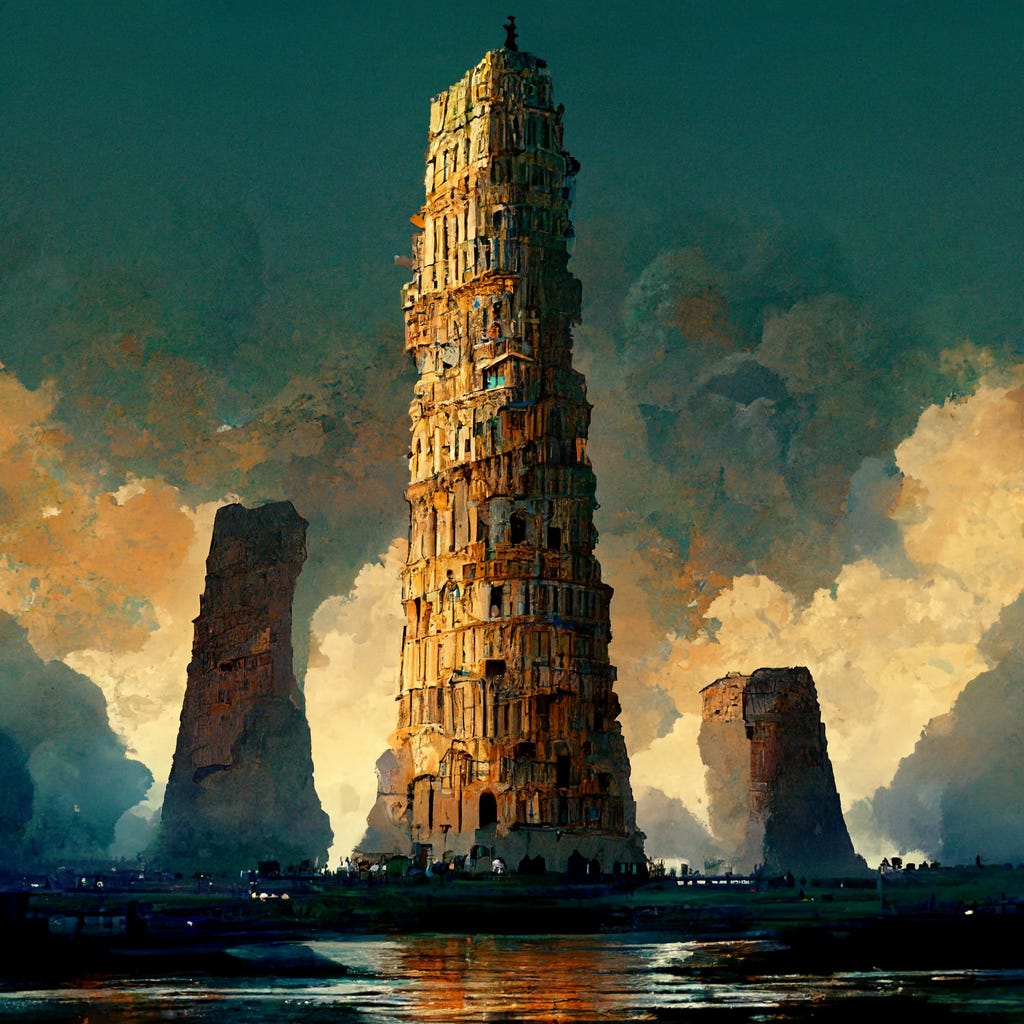
It is written that God created man in His image. The final dream of AI is that Man will create gods in his image. A new Babel, reaching to heaven.
Note: This is the fourth of a six-part series, “Notes on the AI Revolution.” The pieces are planned to be published two weeks apart. The series will also be published on my site.
Couldn't agree more. Our drive for something beyond the material, even with AI, is just so fundamentally human. Really insightful.